Industry / Broadcast and media

A broadcast studio,in a rack.

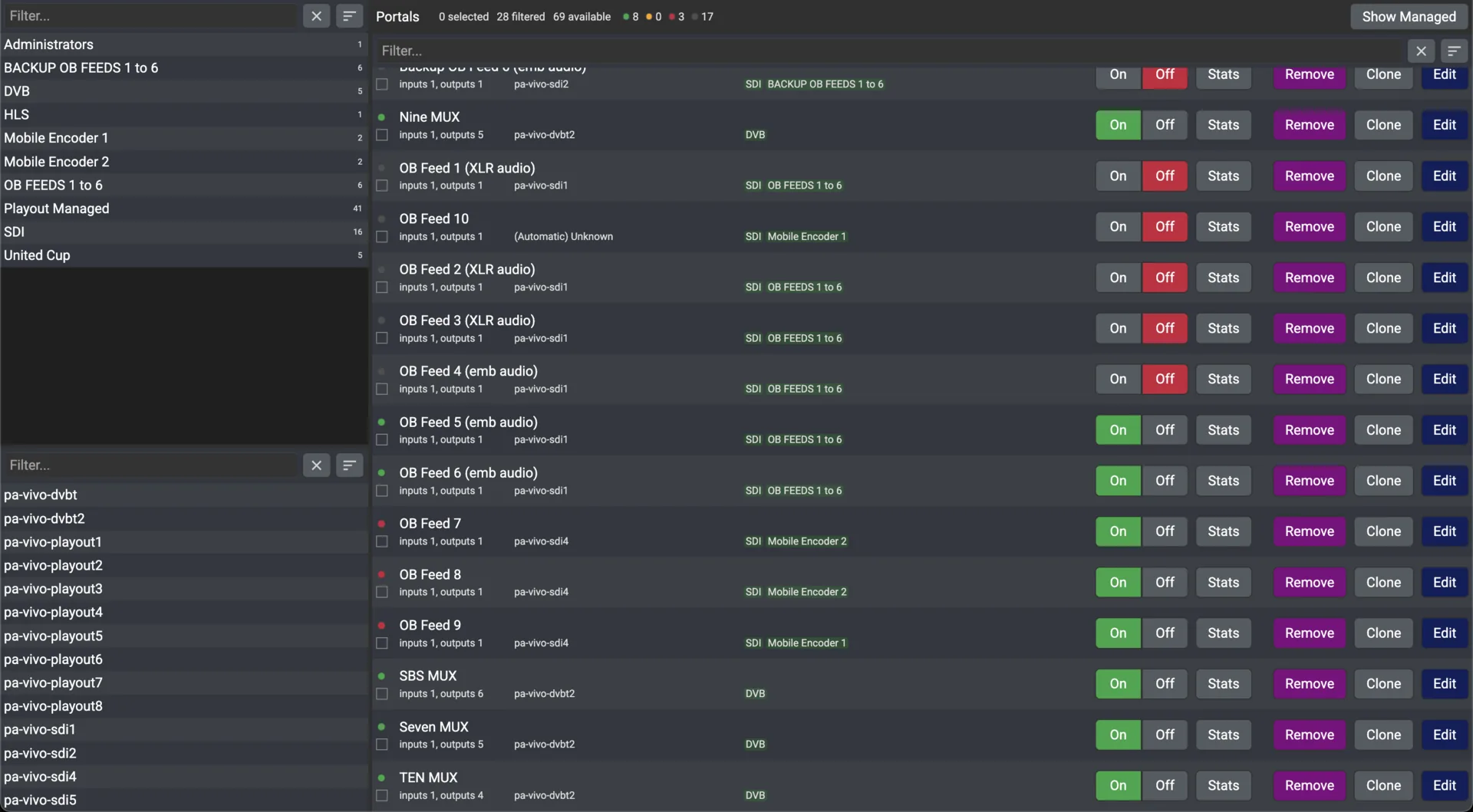
Vivo takes SDI, DVB, NDI, SRT and SMPTE ST 2110 in and puts multicast, SRT, HLS, RTMP, WebRTC, NDI or ST 2110 out, all managed from one browser portal. Encore records any channel by time, by programme or continuously, and Symphony composes graphics and web pages over the live feed.

Our client QVC runs their studios, call centres and warehouses in the UK and Italy on it, across more than 500 displays.

What changes in the facility

Better outcomes for engineering, production, compliance and the budget

One head end for ingest, routing, distribution, recording and branding, on commodity IP.

For engineers

Every source on one network

  • SDI, HDMI, DVB-T2 and DVB-S2, NDI, SRT, HLS, RTMP and ST 2110 in; multicast, SRT, HLS, RTMP, WebRTC, NDI, ST 2110 and SDI out.
  • A stored profile brings up the right inputs, portals and outputs in one step.
  • Channels are balanced across the appliances and migrate if one fails; a replacement appliance adopts the settings of the one it replaces.
  • Streams already on the network, from IP cameras to third-party encoders, are detected automatically and managed like any other channel.
For production

Anything in, any screen, any platform

  • NDI sources are ingested, routed and delivered alongside everything else, with no limit on how many.
  • Graphics, tickers and web pages are composed over the live feed in Symphony and played out as a synchronised channel.
  • A multiview layout on a monitor wall from the same channels.
  • Contribution over the public internet by SRT, encrypted, at around a second or less depending on configuration.
For compliance and archive

Record it, find it, play it back

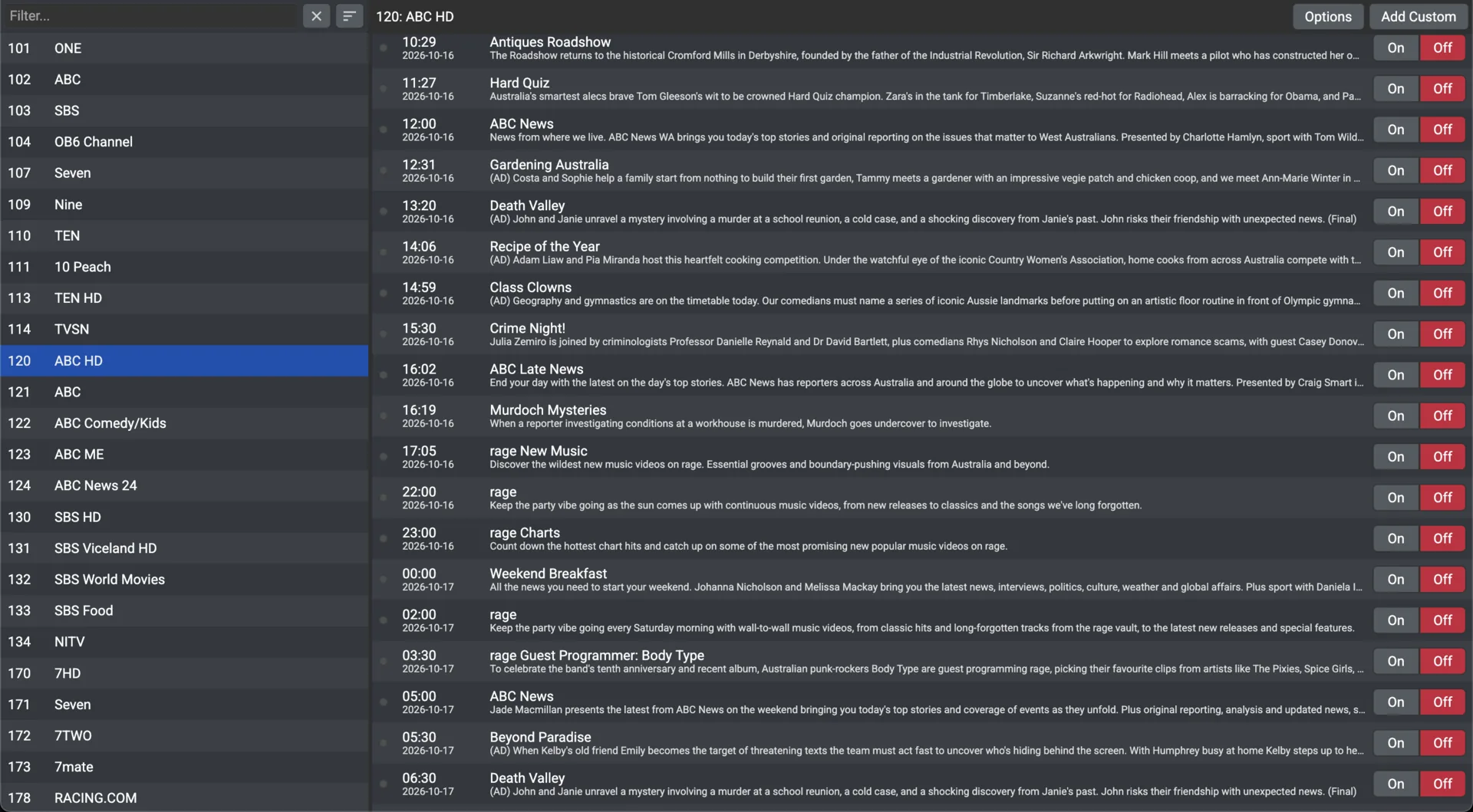
  • Encore records by time, by EPG programme or continuously, including time-shifted channels.
  • Recordings land in one library with their metadata, searchable from Ovation and ready for on demand.
  • Watch folders bring finished files in, in the formats you need.
  • The event log records what each screen showed and when.
For the business

Commodity IP instead of a router refresh

  • Standard IP switches carry the streams; a new channel is a new portal, not a new line card.
  • New formats arrive as software in the Vivo engine: SRT and NDI in 2021, ST 2110 in 2026, Dante in progress.
  • One browser portal and one REST API across every module, with single sign-on.
  • The same system carries the office signage, the newsroom screens and the canteen TV.

Where it sits in the facility

From ingest to the last monitor

Each stage of the chain is a module of the same system, configured in the same browser.

  1. 01
    Ingest

    Off-air DVB, SDI from studios and OB, NDI, SRT, HLS and ST 2110 sources, each as a channel in Vivo.

    Vivo
  2. 02
    Master control and playout

    Playout channels with Symphony branding over them, running as synchronised multicast.

    Symphony
  3. 03
    Studios and galleries

    NDI in and out; multiview walls from the same channels; a return feed to any screen.

    Vivo
  4. 04
    Newsroom and edit suites

    Every channel on the desk through Ovation Desktop, and the recordings in the library.

    Ovation
  5. 05
    Remote contribution

    SRT over the public internet, encrypted, with a stored profile for each event.

    Vivo
  6. 06
    Distribution

    Multicast on site; SRT, HLS, RTMP or WebRTC off site; ST 2110 onward into broadcast environments.

    Vivo
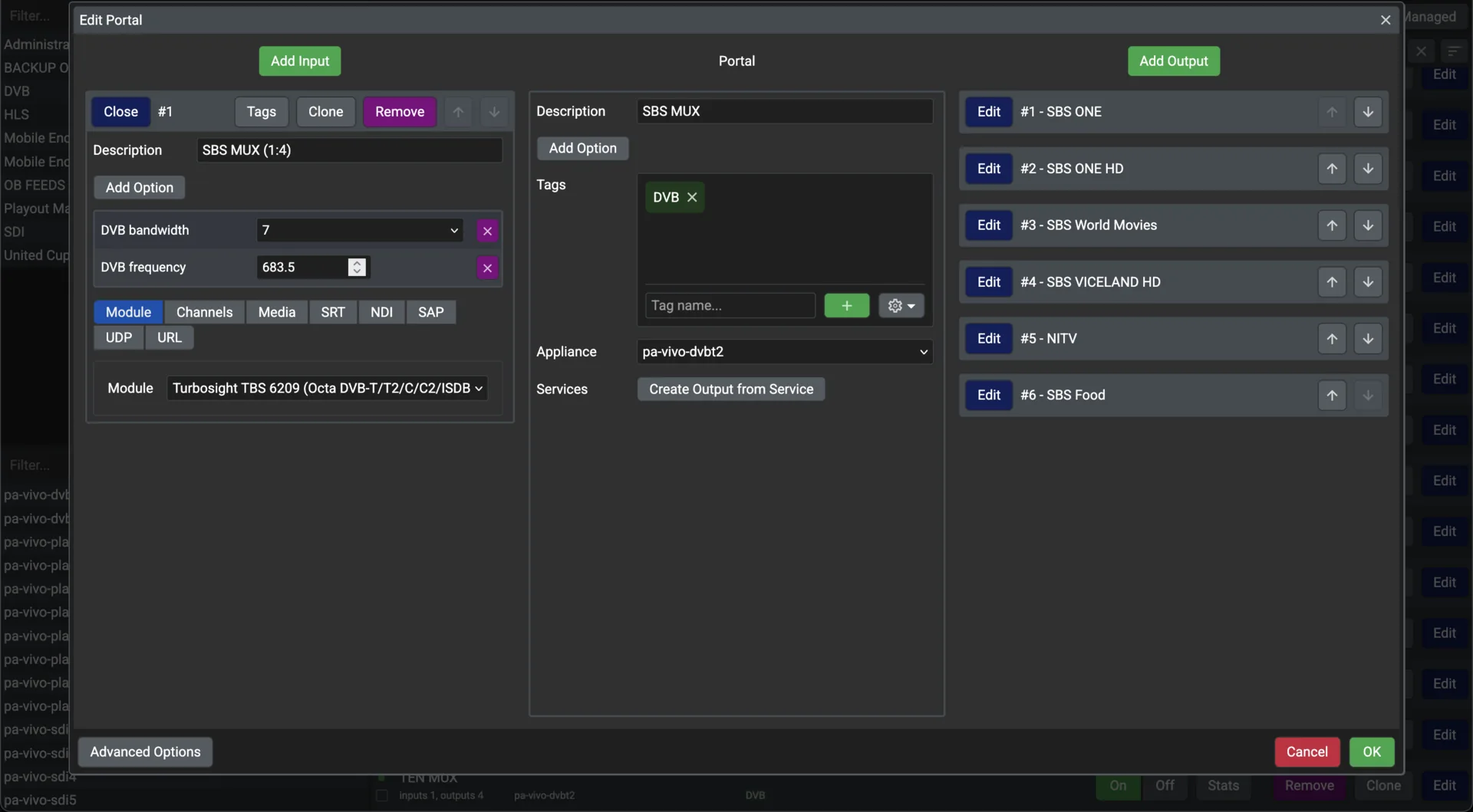
Editing a Vivo portal: the DVB input on the left, the portal with its tags and appliance in the middle, and the six outputs on the right
A Vivo portal being edited: the input on the left, the portal and its tags in the middle, the outputs on the right. Captured on a live head end.
A show on StreamVue

From rundown to recap

A realistic timeline of StreamVue running the floor: automation, failover and orchestration invisible to everyone except the operators who trust it.

08:00

Rundown lock

The head end is set for the day: a stored Vivo profile brings up the right inputs, portals and outputs in one step.

18:00

On air

SDI, NDI and ST 2110 sources are ingested, routed through portals and distributed as multicast, SRT, HLS, NDI or ST 2110, with no re-patching.

18:28

Regional break

Playout channels carry the regional content; Encore records the output for the compliance archive.

19:00

Off air

Recordings land in the Filestore with their metadata, ready for playback or on demand, while the live channels keep running.

Open standards, your own hardware

The formats are in the engine, not in a line card

New protocols are compiled into the Vivo engine as they matter, and every one of them is handled alongside the rest.

ST 2110 and NDI

Both in the Vivo engine alongside SDI and DVB, and any ingested source can be delivered onward into ST 2110 environments.

SRT across the internet

Encrypted, with error correction, at around a second or less depending on configuration: a replacement for satellite or leased links.

Multicast on the LAN

One stream for every screen, announced with SAP, AES encrypted where needed.

Appliances that cover for each other

Channels migrate if an appliance fails, and a replacement adopts its settings.

A browser and an API

Chorus runs in a browser, and its REST API is the one the portal itself uses.

Works without the internet

Satellite, aerial, the filestore and on-site cameras carry on through an outage; only a channel that arrives over the internet depends on it.

Proof

Broadcasters that run on StreamVue

The figures are from the case studies, which you can read in full.

500+

displays across QVC’s studios, call centres and warehouses.

QVC UK and Italia
2

countries, the UK and Italy, in one centrally managed deployment.

QVC UK and Italia
Live

stock and sell-out information on the studio and call-centre screens, queried from the business systems.

QVC UK and Italia

Re-architect your facility on open IP

Walk through a StreamVue head end with our engineering team.